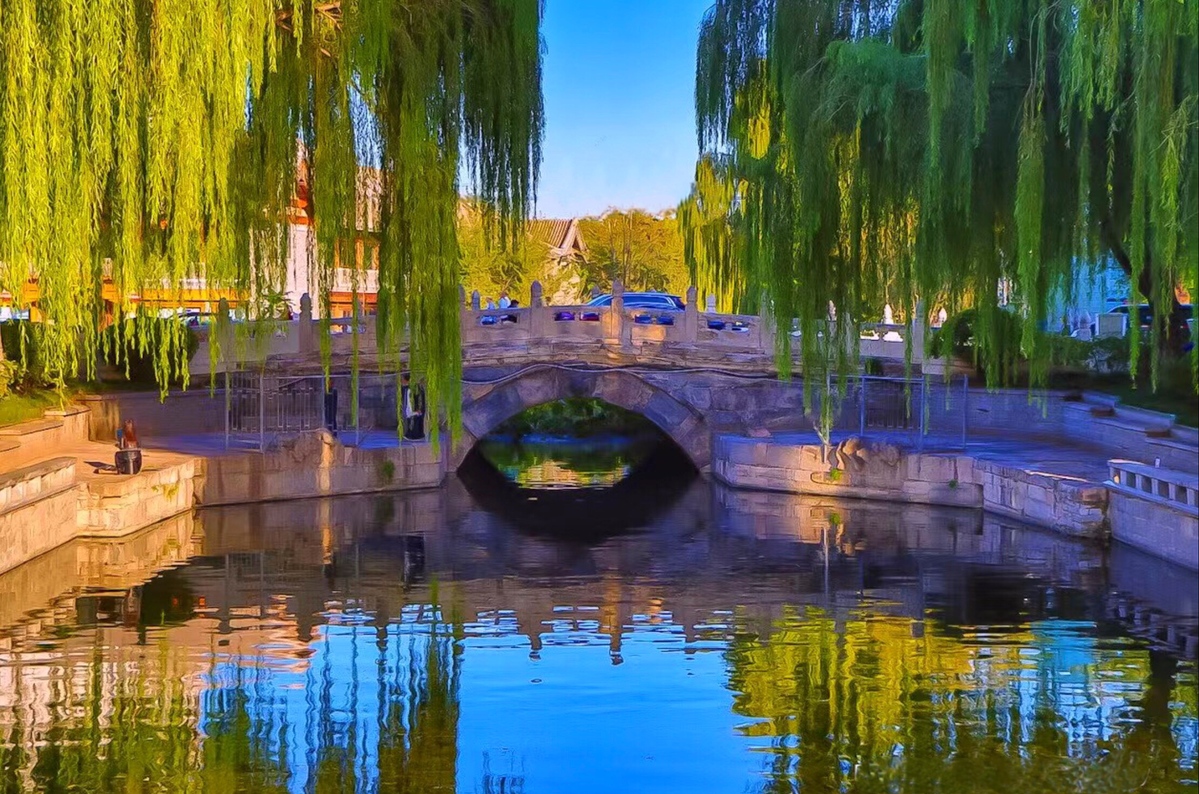
Wanning Bridge
Introduction
Wanning Bridge is a historically significant site located along the Beijing Central Axis, which serves as the backbone of China's capital. The bridge, a single-arch white marble structure, is a part of the Beijing-Hangzhou Grand Canal and represents a blend of China's rich cultural heritage and architectural achievements. As one of the many landmarks situated along the 7.8-kilometer Beijing Central Axis, Wanning Bridge contributes to the narrative of Beijing's development over centuries. T
History
Wanning Bridge's historical roots can be traced back to its construction during the Yuan Dynasty (1271–1368). It stands as a testament to the intricate urban planning and architectural advancements of ancient China. The bridge was strategically placed along the Beijing-Hangzhou Grand Canal, which was a vital inland waterway facilitating trade and transportation between northern and southern China. The Grand Canal itself is a marvel of engineering and has played a crucial role in the economic and cultural exchanges that shaped ancient Chinese civilization. Throughout its history, Wanning Bridge has witnessed significant historical events and transitions, including serving as a boundary marker along the Central Axis of Beijing—a line that has guided the city's architectural and urban planning since the 13th century. The bridge, along with other structures on the axis, reflects the ideals of harmony and balance deeply embedded in Chinese philosophy and culture.
Architecture
Wanning Bridge is an exquisite example of Yuan Dynasty architecture, characterized by its single-arch design crafted from white marble. The choice of marble not only adds to the bridge's aesthetic appeal but also underscores the era's technological advancements in stone masonry and construction. The bridge spans over a section of the Grand Canal, and its elegant arch design allows for smoother passage of boats beneath, showcasing the thoughtful consideration of both form and function. The bridge's balustrades and ornamental carvings are imbued with traditional Chinese motifs, contributing to its status as both a functional infrastructure piece and a work of art. Over the centuries, Wanning Bridge has been maintained and restored, ensuring that its architectural integrity remains intact, allowing it to continue serving as a symbol of Beijing's historical and cultural legacy.
Cultural Significance
Wanning Bridge holds a significant place in the cultural tapestry of Beijing. As part of the Beijing Central Axis, the bridge is integral to the spatial and cultural framework that has influenced the city's development for over seven centuries. The Central Axis is not merely a physical alignment of structures but embodies the philosophical and cultural ethos of ancient Chinese urban planning. It exemplifies the principle of Zhong (center), which is central to Chinese cosmology and governance, reflecting the notion of the capital as the heart of the Middle Kingdom. The bridge itself is a cultural icon, celebrated in art, poetry, and music.
Transportation and Connectivity
Historically, Wanning Bridge was a crucial junction on the Grand Canal, facilitating the movement of goods and people between the northern and southern regions of China. This connectivity played a pivotal role in the economic and cultural exchanges that contributed to the development of the capital. In modern times, while the canal no longer serves its original function as a primary transportation route, the bridge remains an integral part of Beijing's urban landscape. Its location along the Central Axis places it within proximity to several significant cultural and historical sites, enhancing its accessibility and connectivity. The bridge area is now a popular destination for tourists and locals alike, offering a glimpse into the past while being seamlessly integrated into the bustling metropolis. Efforts to preserve and revitalize the bridge and its surroundings have further strengthened its role as a connector of Beijing's rich historical heritage and its vibrant present-day urban life.
Renovations and Developments
In recent years, Wanning Bridge has undergone several renovations to preserve its historical and architectural integrity. These efforts are part of a broader initiative to protect and enhance the heritage sites along the Beijing Central Axis. In 2022, significant improvements were made to the bridge's structure and surrounding areas, including the enhancement of green spaces and the refurbishment of the riverbank. Advanced technologies such as 3D scanning and digital modeling have been employed to ensure accurate preservation and to guide restoration efforts. These renovations not only safeguard the bridge's historical value but also enhance its aesthetic and functional appeal, making it a more attractive site for visitors. The ongoing developments reflect a commitment to maintaining the bridge as a key component of Beijing's cultural landscape, ensuring its legacy continues to be appreciated by future generations.
Tourism and Attractions
Wanning Bridge is a prominent attraction along the Beijing Central Axis, drawing visitors with its historical charm and architectural beauty. As part of the larger narrative of the Central Axis, the bridge offers tourists a chance to experience a piece of Beijing's storied past. The surrounding area is rich with cultural and historical landmarks, providing a comprehensive experience of Beijing's heritage. Visitors can enjoy guided tours that highlight the bridge's significance within the context of the Central Axis and explore nearby attractions such as the Forbidden City, the Temple of Heaven, and Jingshan Park. Additionally, digital technologies have been integrated into the visitor experience, with augmented reality apps offering immersive historical re-creations of the area. These attractions make Wanning Bridge a must-visit site for those interested in exploring the cultural and historical depths of Beijing.








